
Chapter 2
A Word on Delivery: A small, measured group of observers reminded the poster that while her boundary was 100% correct, executing it via a heated, late-night argument likely increased the friend's immediate defensiveness, suggesting a calm text delay might have de-escalated the initial shock.
Actionable Steps to Reset Boundaries in a Close Friendship
Navigating the delicate balance between being a fiercely supportive ally and fiercely protecting your own finite time is a challenge many face. To successfully repair a fractured bond without sacrificing your autonomy, execute this structured framework:
Conclusion: Mutual Respect Over Obligation
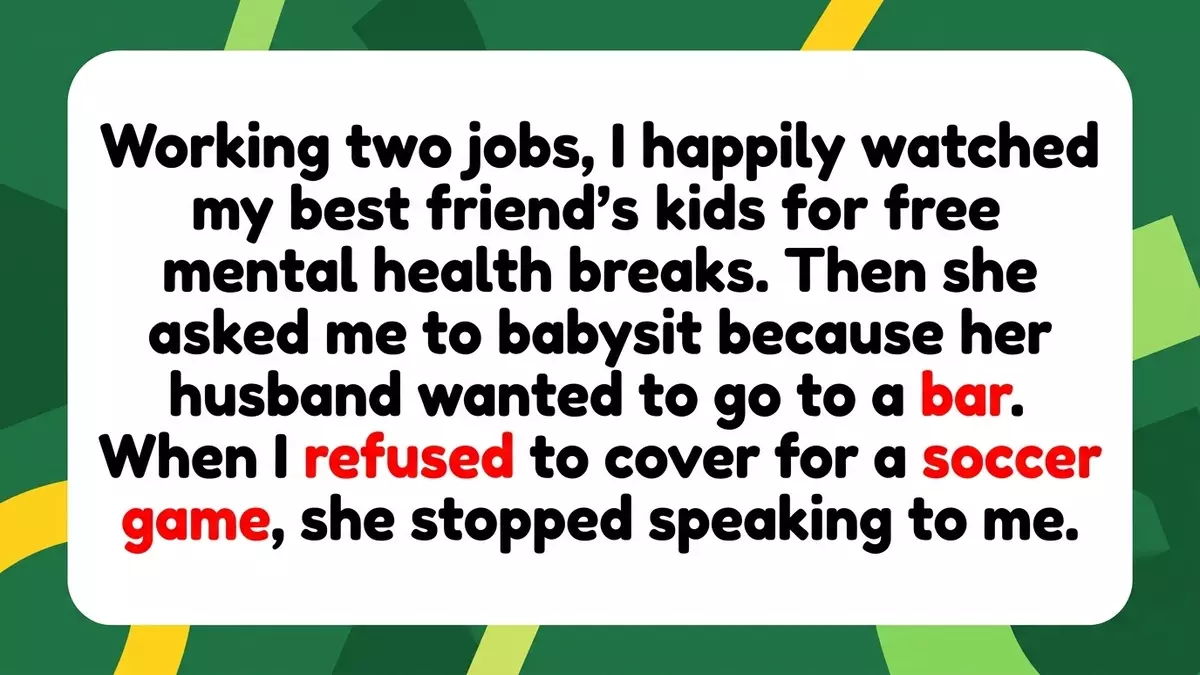
Ultimately, a healthy, long-term friendship must be constructed on a foundation of mutual respect and open, completely transparent communication, rather than guilt, manipulation, and silent obligation. While the urge to provide relief to an overstimulated mother is an admirable display of empathy, maintaining your own mental health boundaries and respecting your personal scheduling limits is equally vital. By standing her ground and refusing to let her generosity be used to subsidize a husband's bar trip, this woman did more than just protect her weekend—she took a necessary step toward building a mature relationship where her time is finally viewed as a gift, not a default expectation.
Frequently Asked Questions (FAQ)
How can I tell the difference between helping a friend in need and being taken advantage of?
True helping feels clean, reciprocal, and leaves you feeling appreciated, even if you are physically tired afterward. You are being taken advantage of when the favors become a one-way street, your boundaries are met with anger rather than understanding, your personal schedule is routinely ignored, and the favor is used to fund another capable adult's leisure time rather than solving a genuine crisis.
What is the healthiest way to say 'no' to a last-minute babysitting request?
Deliver your refusal firmly, immediately, and without offering a long list of excuses that the other person can try to problem-solve. Keep it simple and polite: "I would love to help another time, but I have already locked in my schedule for the weekend and am completely unavailable to watch the kids today. I hope the guys have a great time at the game!"
Why do friends get so angry when you finally set a boundary after saying 'yes' for years?
When you say "yes" continuously for years, you inadvertently train the other person to view your compliance as a permanent, unchanging fixture of their life. When you suddenly introduce a boundary, it disrupts their convenient routine. Their initial anger is rarely about malice; it is a defensive reaction to the discomfort of having to rearrange their own lives now that their free loophole has closed.
How can couples fairly balance childcare when one partner wants social time?
A healthy domestic partnership requires internal negotiation, not outsourcing the labor to an overworked friend. If one partner wants to watch a game at a bar, they should coordinate with their spouse in advance, trading slots so the other partner gets an equal amount of uninterrupted personal time later in the week, ensuring the child-rearing responsibilities remain balanced within the home.
Can a friendship truly recover after a major, heated argument about personal boundaries?
Yes, absolutely. A major argument can actually serve as a powerful catalyst to clear out years of unexpressed resentment and build a far healthier foundation. Recovery requires both individuals to step away from pride, validate each other's feelings of hurt, and explicitly agree to the new boundaries moving forward, shifting the dynamic away from obligation and back toward authentic respect.